A Week of Short Movement Breaks Between Desk Tasks
Short movement breaks between desk tasks fit more easily when each weekday has a simple cue, a comfortable action, and a fallback for busy moments.
Short movement breaks between desk tasks are easier to remember when each workday has a cue and a simple response. A report sent, a meeting ended, or a trip to refill water can mark the pause without turning it into another appointment.
The aim is to change position and move comfortably, then return to work. Use this sample week as a sequence to adapt, not a quota: the cues and actions are suggestions, and a missed pause does not need to be made up. Skip any movement that causes pain or feels unsafe; a qualified health professional can help with personal mobility concerns.
Monday’s first cue
Choose one task boundary that already happens, such as sending a finished draft. Once the draft is sent, stand and reach gently within a comfortable range, then sit or stand back at your desk as you prefer.
If the task runs long, finish the sentence or save the file before pausing. The decision is simple: use the cue when it creates a clean break; if it does not, move the pause to the next natural boundary rather than interrupting focused work.
Tuesday’s walking pause
Pair a meeting’s end with an easy walk along a clear route, perhaps to refill a glass. Keep the route short enough to feel like a pause, not a new errand, and return when you are ready for the next task.
If you work at home, choose a route that does not require tidying or setting anything up. If walking is uncomfortable or the space is obstructed, choose a seated change of position or another comfortable movement instead.
Wednesday’s backup cue
Use a backup for days when tasks run together: the end of a call or the moment you save a file. Change position, roll your shoulders gently, or stand beside your chair if that feels steady and comfortable.
A backup cue should rescue the plan, not create a chain of reminders. If both cues keep landing during urgent work, choose a different transition that occurs after the work is complete.
Thursday’s quiet prompt
Try a low-noise cue that fits your workspace. You might keep a sticky note beside the monitor or place your water glass where you will notice it when you finish a task. When you see the cue, take a comfortable pause; if it distracts you or other people, move or remove it.
A phone reminder can also help if it is easy to defer. Treat it as a nudge to look for a suitable pause, not a command to stop during a presentation or careful task.
Friday’s simple review
At the end of the workweek, notice which cue fit naturally, which one repeatedly collided with work, and which movement felt easiest to start. Keep what worked and replace only the part that caused friction.
There is no need to build a color-coded calendar or set an alarm for every task. That adds upkeep without fixing a cue that does not suit your day.
When should the plan change?
How many movement breaks should I plan?
Start with a few likely opportunities across the workday rather than an exact target. If the cue is easy to notice and the pause is easy to return from, keep it; if it becomes a burden, simplify or replace it.
What if I miss a planned pause?
Let it go and use the next natural transition if one appears. Do not extend the next break or try to repay the missed one.
Can a reminder interrupt focused work?
It can, so make reminders deferrable and wait for a clean boundary, such as finishing a sentence or ending a call. If a particular alert repeatedly arrives at the wrong moment, change its timing or use a quieter cue.
What if standing is uncomfortable?
Choose a seated change of position or another gentle movement that feels suitable, and do not force an action that causes pain or instability. Ask a qualified health professional for guidance if a condition or mobility concern makes choosing movements difficult.
A worked week
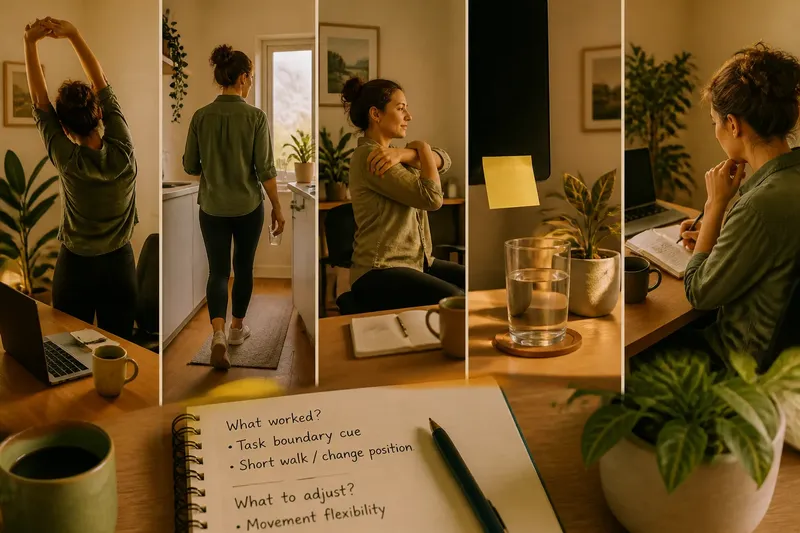
Imagine you work from home and finish a draft before lunch, but often open email immediately afterward. On Monday, you choose “draft sent” as the cue and a short walk to refill your glass as the response. On Tuesday, the draft is delayed by a call, so you wait until the call ends and then change position instead. On Wednesday, the walk feels inconvenient because the kitchen is busy, so you stand and reach gently beside your desk. By Friday, you can see the tradeoff: the task boundary is a useful cue, but the movement should stay flexible. Keep the cue and choose the easiest comfortable action available that day.
Short movement breaks between desk tasks work best as a flexible habit, not a measure of productivity. Keep one familiar cue and a couple of comfortable options ready; the plan can shift with the workday without disappearing.